Spring in Morocco offers the best conditions for driving across all regions, especially if you plan to rent a car and explore at your own pace. You get safer tyre grip than in mid-winter mountain cold, and you avoid the extreme heat that makes long drives tiring in summer, especially in the south and desert areas.
If you are looking for the best places to drive in Morocco, consider March to May as your sweet spot. You can see snow on high peaks and fresh green fields on the same day, with better comfort and generally good visibility on the road. Our guide helps you plan your Morocco road trip in the spring.
Spring, from March to May, is one of the best times to drive in Morocco. Temperatures are comfortable across most regions, landscapes are greener than at any other time of year, and you can experience the country’s diversity without the intense summer heat.
Morocco’s road network makes driving practical and rewarding. Multi-lane motorways connect major cities, while smaller national and regional roads deliver the scenery. In spring, you can move quickly between regions, then slow down when you pass through flowered valleys, snow-capped peaks, or coastal cliffs in clear Atlantic light.
Why choose a road trip instead of staying in one city? Springtime in Morocco is when:
When you drive in Morocco, you can stop at a viewpoint when the light is perfect, pull into a small village café, or follow a side road simply because it looks interesting.
Morocco’s landscapes change quickly, and so does its microclimate. In just a few hours, you can move from cool Atlantic breezes in Essaouira to the warmer inland plains near Marrakech, then continue toward snow-lined passes in the High Atlas before descending to mild desert-edge towns like Ouarzazate.
If the coast feels windy, you can drive inland. If mountain clouds roll in, descend into a sunnier valley. And if one region has unexpected rain, another may be dry and bright.
Morocco has modern motorways, and many are toll roads. The motorway system operates on a pay-per-use basis with toll stations. For frequent motorway travel, you can use an electronic toll pass (Jawaz), which allows you to use dedicated lanes without fully stopping. However, in spring, the most scenic drives are usually on national or regional roads.
For the most famous spring routes, a Morocco car rental in good condition is enough. Roads to major valleys, mountain passes, and desert gateways are paved. A 4x4 is useful only if your plan includes rough tracks after heavy spring rain, remote viewpoints, or unsealed detours, such as the route to Tafraoute’s Painted Rocks.
Below are the best routes to drive in Morocco during spring. They offer dramatic scenery, seasonal colours, and manageable road conditions.
The Atlas Mountains route from Marrakech to Ouarzazate is a scenic drive in Morocco. The road climbs to the Tizi n’Tichka Pass at about 2,205 metres, where snow can still appear from November to March, while valleys below turn green in spring.
The full journey covers roughly 200 kilometres and usually takes 4 to 5 hours, as the winding mountain road demands careful driving. Expect dramatic hairpins, wide viewpoints, and a paved route along National Route 9. Spring offers cooler temperatures, though poor weather can make mountain roads hazardous.
A key stop is Aït Benhaddou, a UNESCO-listed ksar showcasing traditional earthen architecture. For a quieter detour, consider Telouet, known for historic kasbahs and peaceful valley scenery.
The Dades Valley and Todra Gorge route is one of the most dramatic routes to drive in Morocco if you want classic canyon scenery. The road winds through red rock landscapes, palm groves, and traditional villages before narrowing into striking gorges. In spring, the Valley of Roses near Kalaat M’Gouna begins to bloom, and you may see Damask rose products sold at roadside stalls even outside festival dates.
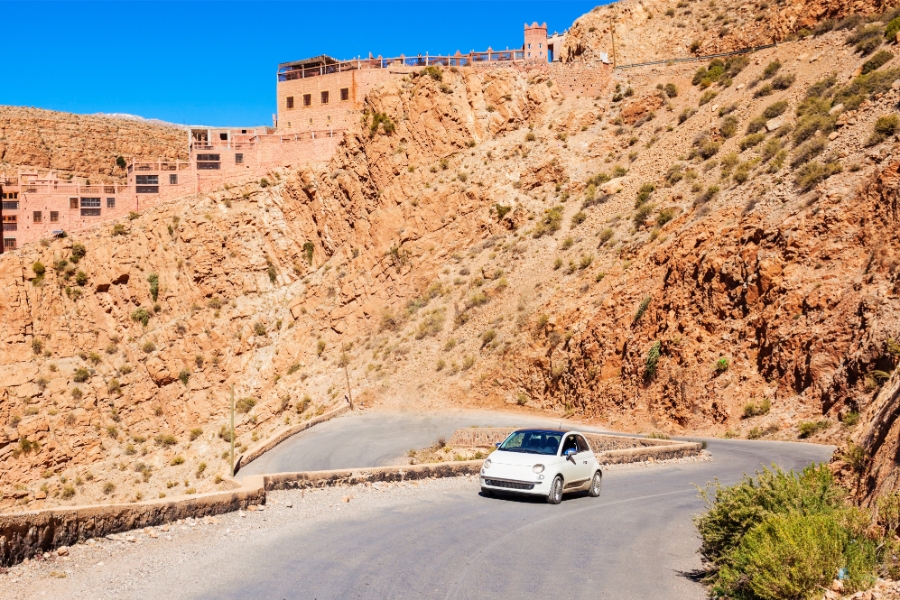
The Dades Gorge section, often linked with Road R704, stretches for about 61 kilometres between M’Semrir and Boumalne Dades. It is paved but can become slippery after rain, so steady speeds and careful braking are important. The stacked switchbacks are the highlight, climbing in sharp bends to wide viewpoints over the valley.
Todra Gorge offers towering cliffs and cooler walking conditions in spring. Between the gorges, traditional Amazigh villages are perfect places to slow down, explore, and take breaks.
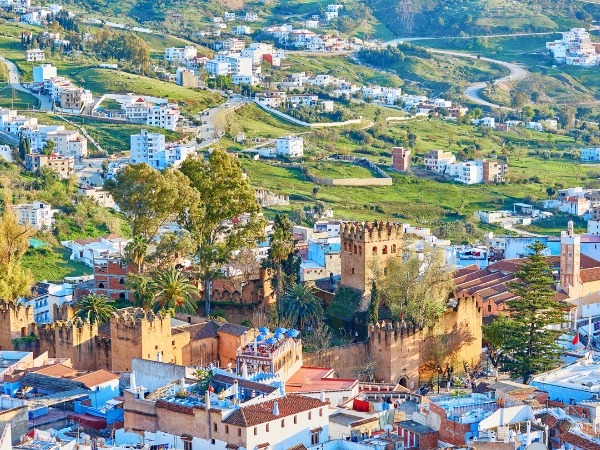
The Chefchaouen and Rif Mountains route offers a refreshing way to drive in Morocco during spring. Unlike the harsher southern landscapes, this northern region features rolling hills, forested slopes, and cooler mountain air.
Chefchaouen is located on the mountainside and is known for its blue-washed houses and scenic paths leading into the Rif range. In spring, the mild temperatures make both walking and driving far more comfortable than in summer.
From Tangier, the journey is about 112 kilometres and takes roughly 2 hours. Nearby highlights include Akchour Waterfalls and Talassemtane National Park, ideal for a half-day nature trip.
If you want an easy, high‑reward day drive, this is it. Roads from Marrakech to Essaouira are simpler than the Atlas passes. It takes you from city heat to Atlantic air in a few hours. The distance is about 175 kilometres, and the journey takes 2.5 to 3 hours by road.
In spring, the coast is a relief. You get Atlantic breezes that can make you feel instantly refreshed after Marrakech. You pass through the Arganeraie region, where the argan tree ecosystem is recognised as unique and adapted to an arid climate, and where argan oil has many uses (cooking, medicines, cosmetics).
When you arrive, Essaouira gives you history and atmosphere, not just a beach. The medina is a World Heritage site with a long history as an international trading seaport. Walk the ramparts, watch the fishing boats, and enjoy the harbour light in the late afternoon.
This route is also friendly for first‑timers who want to drive in Morocco but prefer simpler roads. You still need to drive defensively, but there are no heavy mountain fortifications and tight pass bends.
This route suits travellers looking for a quieter and more local mountain experience than the High Atlas. The Anti-Atlas landscape features rounded peaks, wide open horizons, and distinctive pink rock formations. Spring is attractive early in the season, when Tafraoute is known for almond blossom, typically from late winter into early spring.
A key stop is the Painted Rocks near Aguerd Oudad, where Belgian artist Jean Vérame painted granite boulders in 1984, creating a striking blend of art and nature. Access is via a rough track, so reasonable ground clearance and careful driving are advisable, especially after rain. The Ameln Valley offers terraced fields, small villages, and a relaxed local way of life.
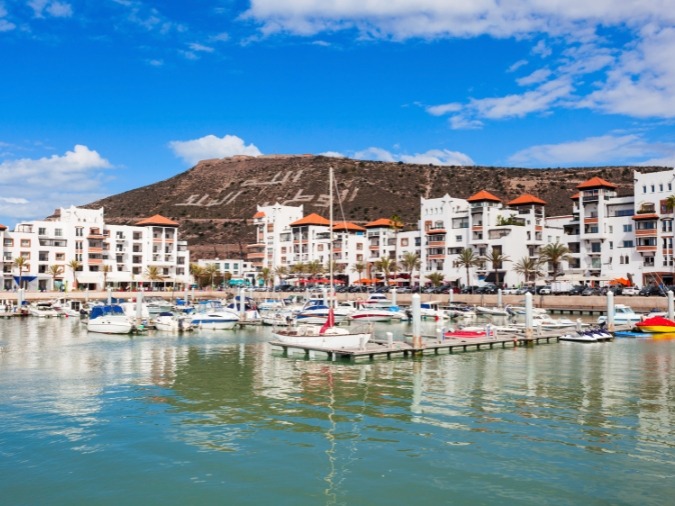
This is one of the best routes to drive in Morocco if you enjoy dramatic Atlantic scenery. The road south of Agadir follows cliffs, ocean winds, and wide coastal views. In spring, it often feels quieter than the peak summer season. Plan photo breaks for late afternoon light and choose safe parking areas rather than stopping near blind bends.
Mirleft is a great place to stop midway for coffee or a short beach walk before continuing south. Legzira Beach is the natural highlight, though tides affect access and walking space. One of its famous rock arches collapsed, so you will see a single main arch rather than the older two-arch formation. Sidi Ifni offers Spanish-influenced architecture reflecting its history as a former Spanish territory.
Spring is one of the most rewarding times to drive in Morocco. The weather is comfortable, the landscapes are alive with colour, and the roads connect you easily from coast to mountains to desert edges. With fewer extremes in temperature and generally good driving conditions, you can travel independently and comfortably.
Rent a car in Morocco with Final Rentals to enjoy competitive rates and 24/7 support. Select your pickup location, enter your travel dates, and choose a vehicle for your trip. Book and manage your car rental at any time. Download the Final Rentals app on Google Play and the App Store.
It can be safe for tourists if you drive defensively and stay alert. Spring is one of the best times to drive due to mild temperatures and clearer conditions. But you should still avoid night driving and take extra care on mountain or rural roads, especially after rain.
You can rent a car in Morocco at major airports like Casablanca, Rabat, Marrakech, Agadir, Tangier, and Fes or in city centres across the country. It’s best to book your car online in advance for the best rates and availability.
Requirements depend on your nationality and the country that issued your driving licence. Rental companies may have their own specific policies. In general, you’ll need a valid driving licence, a passport, and a credit card in the driver’s name, and in some cases an International Driving Permit (IDP).