When you drive in Morocco, the roads can feel very different from what you know at home. Traffic accidents are a serious risk, and road safety can vary significantly depending on the area and weather conditions.
Our guide explains what documents you may need when you drive and rent a car in Morocco, how enforcement and fines operate, how to handle an accident, and the most important road-safety habits.
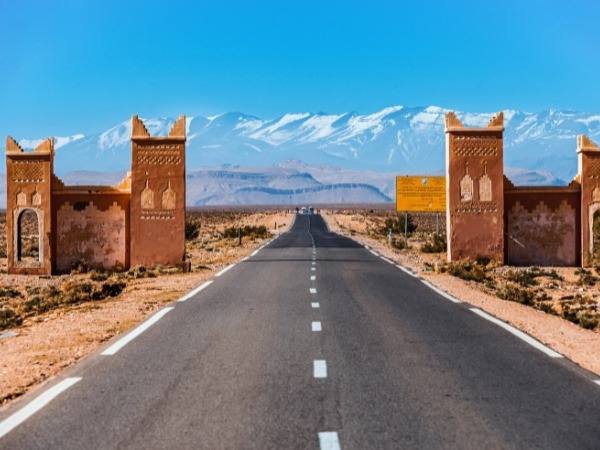
Morocco has modern motorways connecting major hubs, while many rural and mountain routes are narrower and can be badly surfaced. Our research identifies road travel as a key safety topic and highlights traffic accidents as a significant danger. Your risk level depends greatly on road type, time of day, and local conditions.
For tourists, choosing to drive in Morocco can be a smart option when you want to explore beyond major centres, as motorways link places like Tangier, Rabat, Fez, Casablanca, and Marrakesh. However, a real hazard remains. Driving standards can be inconsistent, and you may encounter pedestrians, scooters, and even animal-drawn vehicles on many roads, including high-speed routes.
If you are deciding whether it is right for you, consider if you can stay calm if other drivers do not follow rules, if you must stop at frequent checks, and if poor lighting reduces visibility. Night driving is widely considered risky due to limited lighting, making it more dangerous even for experienced drivers who plan to drive in Morocco.
A sensible first itinerary is to keep your longest drives on tolled motorways and plan scenic detours during daylight. If your journey includes the Atlas, the Rif, or remote desert roads, assess your skill level. These areas can be steep, narrow, and hazardous.
To legally drive in Morocco, you must prove identity, authorisation to drive, and, where relevant, insurance cover. Foreign driving licences are typically valid for up to one year, after which residents must obtain a Moroccan driving licence, often requiring a driving test. Some travellers may also need an International Driving Permit (IDP), depending on their licence origin.
Start with your licence. Foreign licences are generally valid for up to one year, after which a Moroccan licence is required for longer stays. If you transition to residency rules, the driving test may be conducted in Arabic or French, with translators available.
Requirements vary depending on your licence’s issuing country, and rental companies may request additional documentation. An IDP allows you to drive abroad without taking local tests and may be required by some rental agencies.
For UK licence holders, the 1968 version of the IDP is required alongside your licence, and older versions are not accepted. You must obtain the IDP before travelling.
You should also carry your passport or accepted identification at all times, as checkpoints are frequent. Keeping identification and vehicle documents ready is essential when you drive in Morocco.
When you rent a car in Morocco, insurance is a key part of your agreement. Most rental companies include basic third-party liability insurance, but this often comes with limited coverage. It is strongly recommended to consider additional protection, such as collision damage waiver (CDW) or full insurance, to reduce your financial liability in case of damage or theft.
Before driving, ensure you have all the required rental documents with you at all times. This typically includes your passport, driving licence (and International Driving Permit if required), rental agreement, and proof of insurance provided by the rental company.
When you drive in Morocco, enforcement may involve roadside checks, on-the-spot fines, and formal procedures. Police may stop drivers for inspection in both urban and highway settings, and checkpoints are common. In some cases, your documents may be held until fines are settled.
The strictest rule concerns alcohol. Drink-driving is a serious offence, and any detectable alcohol can result in fines or imprisonment. The safest approach is to avoid alcohol entirely on any day you plan to drive.
Speeding penalties can differ from what you expect. Authorities may confiscate your licence if you do not settle the fines immediately. You can request video evidence of a violation, pay on the spot with a receipt, pay later while your licence is held, or contest the fine in court. Obtaining a receipt is crucial when paying fines on the roadside.
If an accident involves injuries, you must remain at the scene and not move vehicles until police arrive and document the incident. The police emergency number is 190.
For accidents involving only material damage, police may not intervene. Instead, drivers should complete a joint accident report form, known as a “constat amiable,” signed by both parties. Keeping one in your vehicle is highly practical.
If a crash is fatal, authorities may detain drivers believed to be responsible before trial. Expect checkpoints and remain calm. Keep documents organised, act politely, and follow official procedures if fines are issued.
Road safety when you drive in Morocco is closely linked to infrastructure quality, visibility, and seasonal weather hazards. Mountain roads can be steep, narrow, and winding, while rural routes are often poorly maintained. Unexpected hazards such as pedestrians, scooters, and animal-drawn vehicles can appear on any road.
Night driving in Morocco is strongly discouraged due to poor lighting and reduced visibility. If unavoidable, reduce speed, increase following distance, and remain alert for unlit hazards.
Mountain driving requires extra caution. Roads in the Atlas and Rif regions can be particularly challenging, especially during poor weather. Plan journeys carefully, allowing extra time and ensuring travel during daylight hours.
Weather conditions can significantly affect road safety. During the rainy season, flash floods may occur, damaging roads or sweeping away vehicles. Avoid driving through fast-moving water, as it presents danger.
Daily hazards often surprise visitors. Not all drivers follow traffic rules, and unpredictable road users are common. Maintain awareness, keep a safe buffer, and avoid sudden manoeuvres.
Motorways are generally easier and safer for long-distance travel, while national roads may be narrower and more congested. High-traffic routes require extra caution.
Time of day and seasonal patterns also matter. Driving behaviour may become more erratic at dusk, particularly during Ramadan, and traffic increases during the summer months when many travellers return to Morocco.
For remote areas, preparation is key. Use appropriate vehicles, such as four-wheel drive for off-road routes, and carry essential supplies, including water. Stick to recognised tourist areas and seek local advice when necessary.
If you choose to drive in Morocco, think of it as an experience that rewards patience, awareness, and flexibility. Stay calm, stay alert, and trust your instincts when something feels off.
Rent a car in Morocco with Final Rentals for dependable vehicles, fair pricing, and easy pick-up options. Select your pickup location, enter your travel dates, and choose a vehicle for your trip. Book and manage your car rental at any time. Download the Final Rentals app on Google Play and the App Store.
If you hold a UK driving licence, you need the 1968 version of the international driving permit along with your licence, as older versions are not accepted. For other nationalities, requirements may vary, and some rental agencies may request an international driving permit, so it is important to confirm before travel.
Foreign driving licences are generally valid for up to one year. If you stay longer, you will need to obtain a Moroccan driving licence to continue driving legally.
If an accident involves injuries, you must remain at the scene and wait for the police to arrive before moving any vehicles. For incidents involving only damage, complete a joint accident report form signed by both drivers. Always ensure accurate documentation, as this is essential for insurance and legal processes when you drive in Morocco.