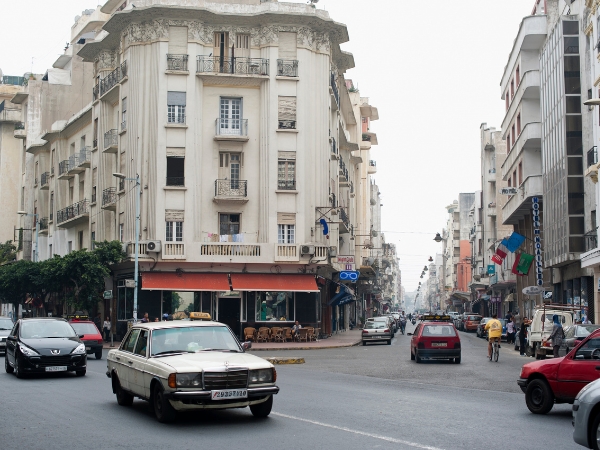
A road trip from Marrakech to Skoura takes you across the High Atlas towards palm groves and earthen kasbahs. You leave the busy imperial city behind as southern Morocco opens up ahead. The direct journey covers about 235 kilometres, but arriving quickly need not be your main goal. Between mountain viewpoints, fortified villages, and Ouarzazate, you have plenty to explore for a full day.
Along the way, you'll discover part of the Route of a Thousand Kasbahs. The name describes a wider region rather than one particular road. Skoura is near the Dadès Valley, where old caravan routes, fortified homes, and oasis farming remain part of everyday life. You can rent a car in Marrakech and stop at Telouet, Aït Benhaddou, and Kasbah Amridil.
Our guide covers the mountain drive, historic kasbahs, and the best ways to experience Skoura's palm groves.

The usual route follows the N9 across the High Atlas to Ouarzazate, then the N10 east towards Skoura. Although the distance is manageable, mountain bends and village traffic can slow you down. Plan enough time to complete the higher section before dark.
The direct drive covers about 235 kilometres and takes around 4 hours in favourable conditions. You can also turn the journey into a 7 to 9-hour road trip by stopping at Telouet, the Ounila Valley, or Aït Benhaddou.
Leave Marrakech around 7:00 A.M. to 8:00 A.M. if you plan several stops. You'll have more daylight for the mountain pass, lunch and photographs. Keep some time spare for slow trucks, roadworks, or changing weather, especially in winter. A planned stop is never worth rushing a blind bend.
Follow the N9 southeast from Marrakech, cross Tizi n'Tichka, then continue toward Ouarzazate. From there, take the N10 east to Skoura. The Atlas crossing needs the most attention, while the landscape beyond Ouarzazate opens into wide, dry valleys. After the high pass, rocky mountain slopes give way to flatter country.
Download an offline map before leaving, and check road signs at major junctions, as mobile coverage can be unreliable in smaller valleys. For a scenic alternative, follow the paved P1506 through Telouet and the Ounila Valley to Aït Benhaddou. The former caravan corridor passes earthen villages and cultivated terraces, but you'll need extra time.
A four-wheel-drive car isn't usually necessary for the main paved route in normal weather. Economy and compact cars work well for lighter luggage, while a saloon offers more passenger space. An SUV offers higher ground clearance, which can help in uneven parking areas and permitted village lanes.
For your kasbah road trip, book a car rental with Final Rentals and compare economy cars, saloons and SUVs. Third-party liability insurance, collision damage waiver and theft protection are included, although excess charges apply. Check the daily mileage limit when choosing your rental period.
Carry your driving licence, passport, booking confirmation and a credit card in the main driver's name. British drivers also need a 1968 International Driving Permit alongside their UK licence. Other travellers should check the rules for their nationality and the car rental company's document requirements.
The Tizi n'Tichka crossing climbs above 2,200 metres through tight bends and steep slopes. Trucks, coaches and local traffic share the road, and temperatures at the pass may be much lower than in Marrakech. Keep to your side, leave space behind large vehicles, and overtake only when you can see far enough ahead. Use a lower gear on long descents to reduce brake wear. Watch for vehicles taking wide turns and avoid stopping on a narrow shoulder.
The most memorable stops on the Marrakech to Skoura drive connect the Atlas crossing with historic southern trading routes. Telouet, Aït Benhaddou and Ouarzazate each tell a different part of that story. Choose two longer visits if you'd rather see the buildings properly than spend all day checking the time.
The powerful Glaoui family linked Telouet Kasbah to trade passing through the High Atlas. Behind its weathered earthen exterior, surviving rooms have colourful zellij tiles, carved plaster and decorated cedar wood. Some areas have deteriorated, so follow local access instructions when visiting.
Continue along the P1506 through the Ounila Valley for views of red hills, terraced fields and traditional villages. The valley once connected Atlas passes with Aït Benhaddou and trade routes farther south.
Aït Benhaddou is a UNESCO World Heritage Site and a remarkable example of a traditional Moroccan ksar. Unlike a single fortress, a ksar contains homes and shared spaces enclosed by defensive walls. You'll see corner towers, patterned earthen brickwork, and narrow lanes built around the hillside.
Earth and wood are central to the construction. Although the building traditions are much older, the surviving structures are generally no earlier than the 17th century. The village once served traders travelling between Marrakech and areas south of the Sahara through the Drâa Valley. Its shared spaces included a mosque, grain storage areas, and places where residents gathered. Beyond the towers, you can see how people lived inside the defensive walls.
Park outside the historic village and walk through the lanes. Wear shoes with a firm grip for the uneven surfaces and uphill paths. If you climb towards the upper granary, you'll get broad views across the dry valley and surrounding settlements.
Ouarzazate is a useful stop before the final stretch east. The Glaoui family expanded Kasbah Taourirt in the 19th century, reflecting the area's role in southern Moroccan trade. The complex includes thick earthen walls, towers, and former residential spaces, although visitor access can vary.
Ouarzazate is also known for film production, with studios and locations used in international productions. It is recognised as a UNESCO Creative City of Film, reflecting its long connection with cinema. You can spend time around the historic centre or visit filming attractions if your schedule permits. Before leaving, refuel, buy drinking water, and have a meal. Under normal conditions, Skoura is less than 1 hour away along the N10.

The drive from Marrakech to Skoura ends in a working oasis rather than a single attraction. Palm groves spread around farms, houses, irrigation channels, and fortified homes. Drive between accessible parts of the oasis, then walk to see the buildings and everyday farming life more closely.

Kasbah Amridil is one of the best places to understand traditional fortified homes in southern Morocco. Its earthen towers surround rooms, courtyards, and former working spaces. Inside, displays of household objects show how residents used the building for family life, storage, and farming. Pay attention to the former stables and rooms at different levels, which show how the household was organised.
Look at the thick walls, the upper rooms, and the views towards the palm grove. A local guide can explain details you might otherwise miss, including how they used separate living and working areas. Check opening hours and admission locally, as access can change.
The palms shelter an active farming community, not a decorative garden. Skoura's traditional khettara irrigation system carries water through underground channels using gravity.
Along the lanes, you'll see cultivated plots, earthen houses, and small settlements among the date palms. Date palms provide shade for crops and fruit trees grown beneath them. Generations of careful water use have helped keep this dry region productive.
Driving helps you reach the wider oasis, but a short walk reveals more about how people use the land. Park without blocking homes or irrigation channels, and avoid crossing fields. Some narrow tracks soften or become damaged after rain.
Beyond Amridil, Kasbah Aït Ben Moro and Kasbah Aït Abou offer more views of Skoura’s fortified architecture. Kasbah Aït Ben Moro now operates as guest accommodation, while access to other properties depends on their current use.
Their restored walls and towers preserve the area's architectural style while serving a modern purpose. A few remain private homes, and others have sections that aren't open to visitors. You can enjoy the architecture without treating every building as a public attraction.
You can appreciate their exteriors from public lanes, but don't assume you can enter private courtyards or climb towers. Ask before entering a property or photographing its residents, especially children. Respect for homes and working farms matters just as much as your interest in the kasbahs.
One of Skoura's most striking sights is the contrast between ochre kasbah walls and green palms. Dry plains and distant mountains add another layer to the scene. Because the buildings share the earth's colour, the palms make their towers particularly easy to spot.
Early mornings bring softer light and cooler walking conditions. Late afternoon is best for capturing wall texture, while strong midday light reveals fewer details. Look for views from public lanes and recognised visitor areas rather than private farmland. Always seek permission before photographing people, and remember that flying drones requires permission from Morocco's aviation authorities.
A Marrakech to Skoura journey can change how you look at the buildings you pass. From a distance, a kasbah might seem like another old fortress. Spend time inside one, and you begin to notice where families cooked, stored food, and found shade. When you reach the palm grove, those everyday details matter more than another photograph. Respecting the people who keep the oasis alive makes your visit worthwhile.
Rent a car in Marrakech with Final Rentals to start your journey from the airport or a city-centre branch. You can share the mountain drive with an additional approved driver and get 24/7 breakdown assistance throughout your trip. Book and manage your car rental anytime. Download the Final Rentals app on Google Play and the App Store.
The drive covers about 235 kilometres and usually takes roughly 4 hours without long stops in good conditions. For a more relaxed journey, plan for 4 hours 30 minutes to 5 hours. You could spend a full day driving from Marrakech to Skoura, with stops in Telouet, Aït Benhaddou, or Ouarzazate. Mountain traffic and weather can add time.
The main N9 and N10 roads are suitable for standard rental cars in normal conditions. However, the High Atlas section has bends, hills, and slower traffic. Reduce your speed, leave enough room behind trucks, and travel in daylight whenever possible.
No, an economy car or saloon is normally enough for the paved route. An SUV provides extra ground clearance on uneven parking areas or permitted local lanes. Your choice matters less than the weather, road conditions, and your rental agreement.