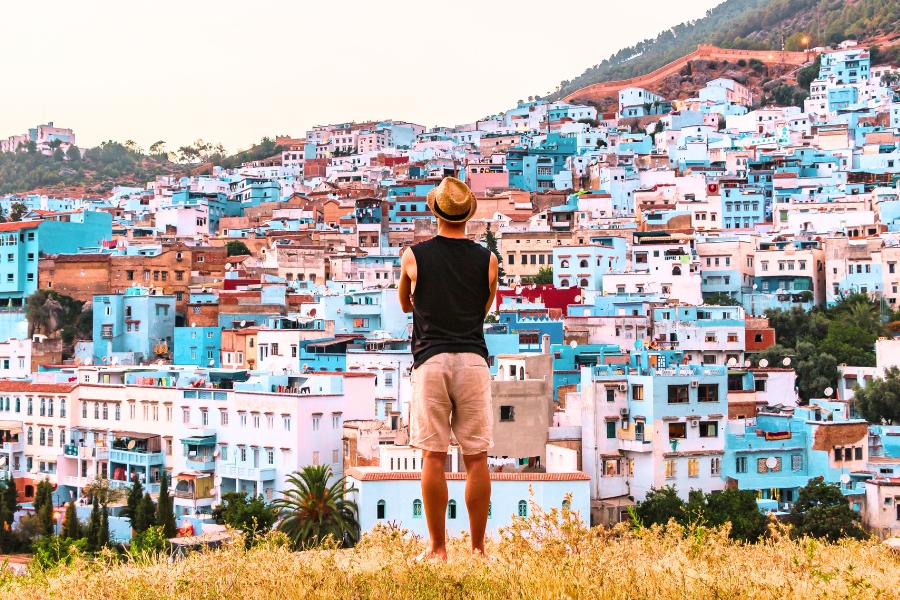
Chefchaouen is famous for its blue medina, but the surrounding Rif region adds another side to your trip. Driving brings you closer to mountains, waterfalls, villages, and coastal towns beyond the old centre. Renting a car in Morocco lets you explore Chefchaouen at your convenience without relying on fixed transport schedules. Our guide covers local roads, parking, mountain driving, nearby sights, trip planning, and practical rental tips.
Chefchaouen is located deep in the Rif Mountains, and many outdoor sights are beyond regular public transport routes. When you explore Chefchaouen by car, you'll have more freedom, flexibility, and control.
The famous blue walls are only one part of the area. Beyond the medina, there are green valleys, olive groves, mountain slopes, and quiet villages. You can stop at viewpoints, pause for photographs, or visit rural areas without following a tour schedule. These drives show you more of the local landscape and make the city a useful base.
Public transport is limited once you move deeper into the Rif region. A car gives you direct access to trailheads, mountain villages, and natural sites outside the city. Most main routes are paved, but you will meet steep slopes, tight bends, and narrow sections.
A car gives you several day-trip choices from Chefchaouen. Tangier is about 112 kilometres away and usually takes around 2 hours. Tetouan is closer, while Asilah is a longer coastal trip. Akchour is about 29 kilometres away and usually takes around 40 minutes by car. You can explore Chefchaouen by car in a day, then head towards waterfalls or the coast the next.
The main roads around Chefchaouen are generally paved, but mountain sections need more care. When you explore Chefchaouen by car, expect frequent bends, changing widths, and slower sections outside the centre.

Roads into the Rif include steep climbs, downhill sections, and many hairpin bends. The surface is generally paved, although loose gravel can gather near the road edges. Use lower gears on long descents to reduce pressure on the brakes. Keep within posted speed limits, especially through villages and tighter mountain sections.
Chefchaouen's medina is mainly pedestrian, so you should park outside its narrow streets. Paid parking is available around Avenue Hassan II, including an area near the Parador and Outa El Hammam. Daily parking can cost around 20 to 30 MAD, though local rates may vary. Some hotels also arrange guest parking. From these areas, you can continue into the medina on foot.
Traffic near central Chefchaouen can slow down at busy junctions and medina entrances. Posted limits vary by road type, so follow the signs instead of relying on a single general limit. Even a short mountain distance can take longer than expected.
Fuel stations are common in Chefchaouen and along larger roads. They are less frequent once you move into remote areas. Refuel early before a longer mountain drive, especially when your tank is getting low. Check the required fuel type when you pick up your car. Larger stations often accept cards, but carrying some cash is useful. Many stations have attendants, and it’s common to give a small tip.
Spend time inside Chefchaouen before heading towards longer routes outside the city. The main sights are compact, walkable, and easy to combine after parking near the medina.
The historic medina is known for its blue and white buildings. Explore the narrow lanes on foot, where you will find artisan shops, small souks, fountains, and traditional homes. You can also browse wool blankets, pottery, and other local crafts. The old town is compact, so walking gives you time to notice its colours and details. Afterwards, you can explore Chefchaouen by car beyond the busy centre.
Plaza Outa El Hammam is the main square inside the medina. Cafés and restaurants line the square, while the Kasbah stands along one side. Its gardens offer a quieter break from the surrounding lanes. You can also climb the tower for panoramic views over red roofs, blue walls, and nearby mountains. Entry usually requires a small admission fee.

Ras El Maa is just beyond the medina wall on the eastern side. This mountain spring has long been linked with Chefchaouen's water supply. A stream runs beside a stone bridge, and locals often gather around the area. You can walk here directly from the medina. The flowing water and greener setting provide a pleasant break before a longer journey.

The Spanish Mosque stands on a hill above Chefchaouen and dates from the 1920s. It never became an active place of worship and now draws visitors for the view. Start near Ras El Maa and follow the uphill trail for roughly 20 to 30 minutes. You can see the blue medina framed by the Rif Mountains. Watching the sunset here is popular, so bring water and wear shoes with a good grip.
Route planning matters more in the Rif than a quick look at distance suggests. To comfortably explore Chefchaouen by car, plan around mountain roads, daylight, and weather before leaving.
A small or compact car is practical for paved routes and easier to park around town. A sedan gives you more luggage space, while an SUV can provide extra ground clearance on rougher approaches. You do not need a 4x4 for the normal paved route into Chefchaouen. Choose more space when travelling with hiking gear, children, or several passengers. Drivers must also meet the rental company's age and licence rules.
If your route includes longer mountain days, you can book a car rental with Final Rentals for more flexibility. Unlimited mileage, Collision Damage Waiver (CDW), and Third Party Liability Insurance (TPL) are included, with compact, standard, and SUV car types available.
Rain and fog can reduce visibility on higher Rif roads. Wet surfaces can also make tight bends more slippery. Winter, from December to February, can bring colder conditions and occasional snow at higher elevations. Check the forecast before mountain drives and postpone a route when visibility is poor. Clear weather also makes it safer to hike around Akchour.

Try to keep longer mountain drives within daylight hours. Many rural roads have limited lighting, while bends and roadside activity are easier to see during the day. An early start gives you more time for photo stops, cafés, and short walks. Plan your return before darkness when possible, especially after hiking or visiting remote villages.
When you explore Chefchaouen by car, you can reach places that are difficult to visit on foot or by public transport. The real benefit is having more control over your route and timing. You can visit the medina, drive into the Rif Mountains, and explore nearby villages or nature stops without rushing. Keep your plans flexible, especially on mountain roads where distances can take longer than expected.
Rent a car in Morocco with Final Rentals to keep your Chefchaouen plans flexible from the mountains to the coast. You can pick up your car at Tangier Ibn Battuta Airport or Fes–Saïs Airport. A domestic licence is accepted, while optional Super CDW can reduce your excess for added cover. Book and manage your car rental at any time. Download the Final Rentals app on Google Play and the App Store.
Choose a compact car or SUV and park outside the medina before entering the old town. Explore the centre on foot, then drive towards nearby mountain areas and trailheads. You can also visit Ras El Maa and walk to the Spanish Mosque viewpoint. Fill up before longer drives, plan your route, and keep time for photographs and local stops.
Popular day trips include Talassemtane National Park and the Akchour waterfalls, around 29 kilometres from Chefchaouen. You can also drive towards Tangier, Tetouan, or Asilah for coastal scenery and historic streets. These trips show different sides of northern Morocco, from mountain trails to seaside towns. Start early when your route includes longer mountain or coastal sections.
Roads between major towns are generally paved, but Rif routes can include tight bends and steep sections. Drive patiently and watch for tractors, livestock, motorbikes, and pedestrians. Carry your licence, ID, rental voucher, and car papers. Fuel stations are common in towns and along main roads. Park outside the medina, follow posted speed limits, and keep cash for smaller stops.